How Should Men’s Pants Fit in 2026? Relaxed, Straight & Tapered Fits Explained
Men’s pants have changed. For years, the prevailing rule was simple: slimmer was better. Slim jeans, slim chinos, skinny trousers and aggressively tapered joggers dominated men’s wardrobes.
Today, menswear has moved in a different direction. There is more room, more drape and more attention being paid to proportion. Straight, relaxed and wider silhouettes have returned, while tapered pants have not disappeared—they are simply being worn with more restraint.
That shift has left a lot of men wondering how pants are actually supposed to fit now. The answer is not that every man suddenly needs wide-leg trousers. The better approach is learning how silhouette works and choosing the fit that makes sense for your body, footwear and lifestyle.
Start With Silhouette, Not Just Size
Most men shop for pants using two numbers: waist and inseam. Those measurements matter, but they do not tell the entire story. Two pairs of pants with the same waist and inseam can look completely different because of the rise, thigh width, taper, leg opening, length and fabric.
Those details create the silhouette.
A well-fitting pant should look intentional from the waist all the way down to the shoe. It should give you enough room to move comfortably while maintaining a shape that complements the rest of your outfit.
That is especially important today because modern menswear is less rigid than it was a decade ago. Men are wearing sneakers with trousers, loafers with casual pants and relaxed jackets with sweatpants. The proportions have to work together.
Relaxed, Straight and Tapered Fits
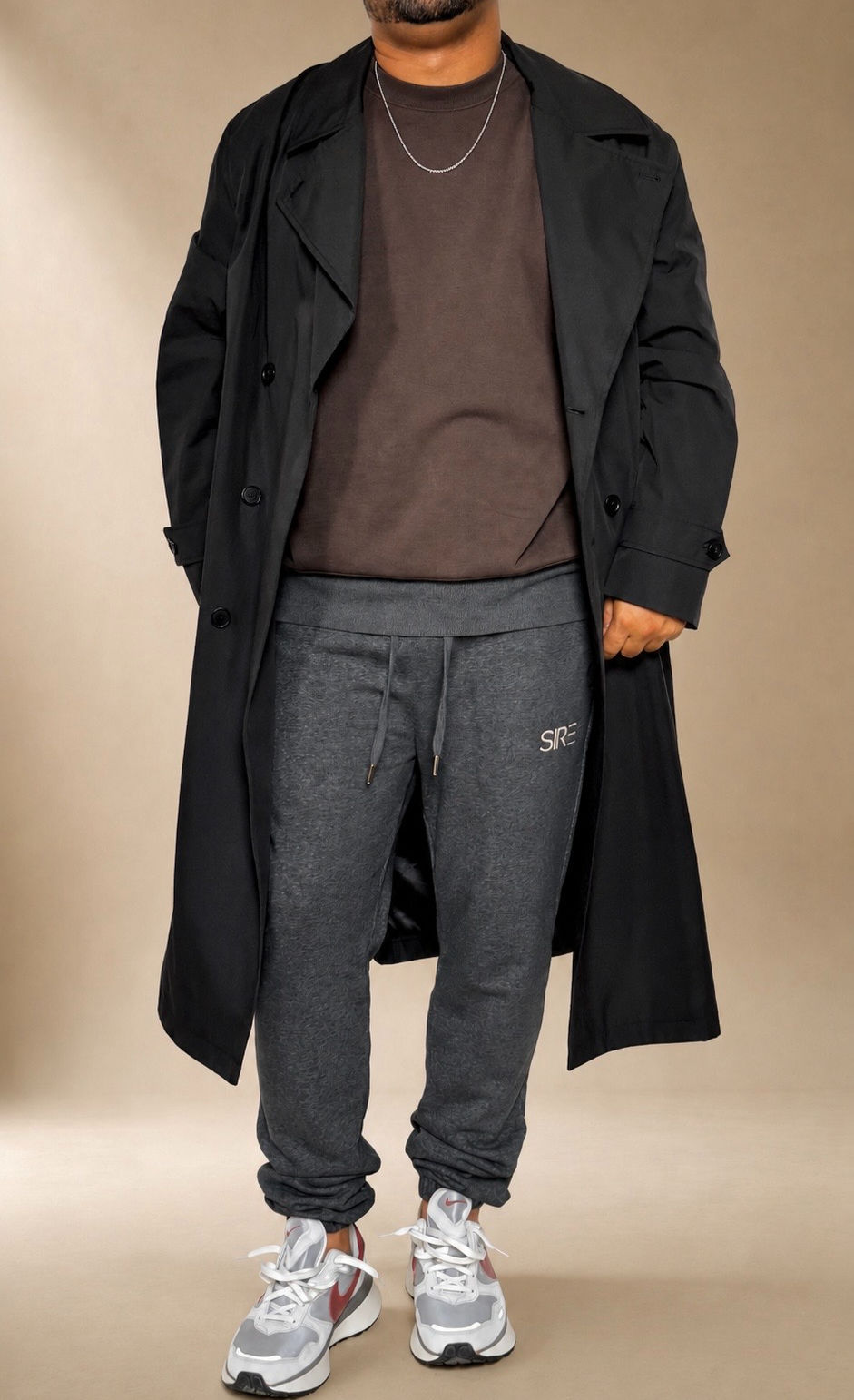
A relaxed-fit pant gives more room through the seat and thigh. The best versions feel comfortable without looking oversized or careless. Relaxed fits pair particularly well with retro running sneakers, chunkier footwear, oversized outerwear and heavier knitwear because the additional volume helps balance the outfit.
A straight-fit pant maintains a more consistent width from the thigh toward the ankle. For many men, this is the easiest modern silhouette to adopt because it sits between slim and wide. Straight pants can work with everything from sneakers and sweatshirts to loafers and tailored jackets, making them one of the most versatile shapes in a wardrobe.
A tapered pant starts with more room through the thigh and gradually narrows toward the ankle. Tapered fits still work extremely well, particularly for men who want a cleaner presentation around their sneakers. The difference today is that the taper does not need to be extreme. A subtle taper creates shape without making the lower leg look overly tight.
Wide-leg pants have also become more visible in modern menswear, but that does not mean every man needs to make the jump. Wider silhouettes can create beautiful movement and drape when they are balanced correctly, but personal style should never feel like a costume. If you want to experiment, start with slightly more volume and let your eye adjust.
Your Sneakers Should Influence the Fit
One of the most overlooked parts of men’s style is the relationship between the pant and the shoe. Men often choose their sneakers carefully, then treat the pants as an afterthought.
The problem is that pants frame the footwear.
A chunky sneaker under an extremely narrow pant can make the shoe look disproportionately large. A very wide pant can completely hide a low-profile sneaker. Pants that are too long may bury the shoe, while pants that are too short can create an awkward break in the silhouette.
At SIRE, this relationship is central to how we think about pants. Instead of always building an outfit from the shirt downward, try beginning with your footwear. Choose the sneakers first, then ask which pant silhouette complements them best.
Chunkier sneakers generally work well with more volume. Cleaner, lower-profile sneakers can pair beautifully with straight or relaxed trousers. Classic runners naturally complement casual relaxed silhouettes. There are no absolute rules, but understanding proportion gives you a much stronger starting point.
Length, Break and Fabric Matter
Fit is not only about width. Length plays a major role in how a pant looks once it reaches the footwear.
A cleaner tapered pant may look strongest with little or no break. Straight and relaxed pants can handle more fabric at the bottom, depending on the intended look. Wider pants may rely on drape as part of the silhouette.
Fabric changes the result too. Lightweight materials fall differently than denim, wool or substantial French terry. A heavier fabric tends to hold its structure, while lighter materials may collapse and move more freely.
That is why the same basic cut can look completely different depending on what it is made from.
So, How Should Men’s Pants Fit?
There is no single correct silhouette anymore, and that is a good thing.
A modern wardrobe can include tapered sweatpants, straight casual pants, relaxed trousers and wider silhouettes. The common thread should be intention. Your pants should look like they were chosen to work with your proportions, footwear and lifestyle—not like they fit a certain way by accident.
Trends will continue moving. Slim becomes relaxed. Relaxed becomes wider. Eventually the pendulum will move again.
Personal style becomes stronger when you understand the principles beneath those cycles: know your proportions, understand your footwear, pay attention to fabric and choose clothing that actually works with the way you live.
At SIRE, we believe pants deserve that level of consideration.
Because great style does not simply end at the sneakers.
Sometimes it should begin there.
From the sneakers up.
SIRE — Designing for the modern man.
Shop today for our latest drop www.sireclothing.com/shop


Comments